


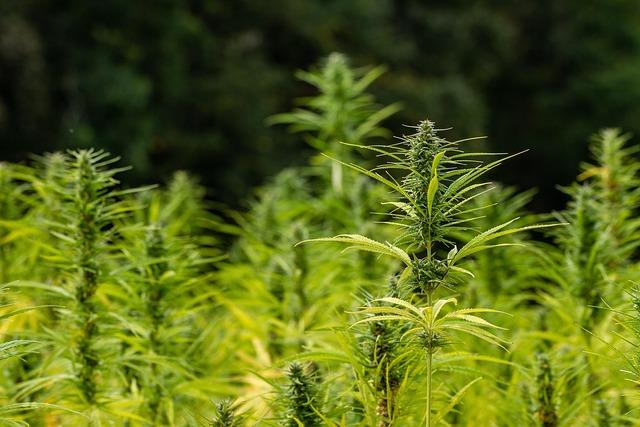
Like any emerging market, the online world of hemp-derived THCA can feel like a bustling port: bright with chance, full of different cargos, and governed by rules that change from quay to quay. This guide is your chart and compass for buying THCA in bulk online-without the jargon overload or hasty decisions. we’ll help you see past flashy listings to the practical signals that separate reputable suppliers from risky offers.
You’ll find clear checkpoints for quality and safety-how to read and interpret Certificates of Analysis (COAs), what purity and contaminant testing really mean, and which marketplace practices suggest reliable supply chains. We’ll also walk through practical buying considerations: pricing structures for bulk orders, minimums and lead times, sample testing strategies, packaging and storage, and what to expect on returns and customer support.
As hemp-derived THCA sits at the intersection of science, commerce, and regulation, this introduction won’t shy away from the legal and compliance context. Laws and enforcement vary by jurisdiction, and responsible buyers verify local rules and insist on transparent documentation. Read on to gain a pragmatic, risk-aware approach to sourcing bulk THCA online-so you can make informed choices with confidence.

Assessing Extraction Methods and Residual Solvent Standards for Safety
Not all extraction pathways are created equal when it comes to consumer safety. Look beyond marketing names and focus on the underlying method: supercritical CO₂ tends to leave virtually no solvent residue when done correctly, while hydrocarbon processes (butane/propane) and some solvent-based techniques demand rigorous cleanup and verification. Ethanol is widely used for botanical extraction and is generally regarded as lower risk, but the real determinant is how well the material is purged and tested afterward - not the label on the jar.
When vetting suppliers, prioritize tangible proof over promises.Demand a current Certificate of Analysis (COA) that lists residual solvent panels and detection limits,and make sure tests are performed by an accredited third-party lab. Key items to check include:
- COA date and batch ID – ensures the test applies to the product you’re buying
- Solvent panel breadth - common solvents plus volatile hydrocarbons should be listed
- Detection limits (LOQ/LOD) – lower limits signal more rigorous testing
- Chain-of-custody or lab accreditation - confirms result integrity
Regulatory thresholds vary by jurisdiction,so adopt a conservative stance: products with solvents reported as “non-detect” or below a lab’s low-ppm target are safer bets. Be especially cautious with extracts labeled as “concentrates” or “bulk crude” – thes are more likely to carry residuals unless they come with explicit remediation and testing documentation. Clarity from vendors about their extraction partners and solvent-handling practices is a reliable proxy for quality control.
| Solvent | Concern level | Typical Testing Target |
|---|---|---|
| CO₂ | Low (generally solvent-free) | Non-detect |
| Ethanol | Low-Moderate | Low ppm |
| Butane/Propane | Moderate-High | Very low ppm / non-detect preferred |
| Hexane | High | Non-detect or strict lab limits |

Interpreting Potency Claims and Terpene Profiles for Intended Use
Think of potency numbers as a map, not a destination. A label that reads 85% THCA describes concentration in the raw material - not the psychoactive outcome after heating. Always factor in decarboxylation: THCA converts to THC with heat, and that conversion rate (roughly 87-95% under typical conditions) changes the effective dose. For bulk buyers, matching that effective potency to the intended use – microdosing, formulation into edibles, or vapor-ready concentrates – prevents costly mismatch between expectation and experience.
Terpene data is the aroma and behavior chart for any hemp product. Beyond scent, terpenes like limonene, myrcene and pinene subtly steer energy, focus and relaxation. When scanning certificates of analysis (COAs), look for full terpene profiles rather than single-note claims: profiles give clues to onset speed, entourage effects and the best delivery format (sublingual vs inhale vs topical).
- Match potency to use: high THCA for extractors, moderate for tinctures, low for trial batches.
- Check conversion math: estimate post-decarboxylation THC to set dosing ceilings.
- Prioritize profile breadth: a broad terpene spectrum frequently enough means smoother formulations.
- demand COAs: verify both cannabinoid potency and terpene quantification.
Use this rapid reference when pairing claims to purpose:
| Terpene | Likely Effect | Best Use |
|---|---|---|
| Myrcene | Relaxing, sedative | Nighttime formulas |
| Limonene | Uplifting, citrus clarity | Daytime tinctures |
| pinene | Alertness, focus | Workload-amiable blends |

Regulatory Compliance Import Rules and Practical Due Diligence Steps
Compliance for hemp-derived THCA imports is a moving mosaic-federal statutes,state laws,and international customs each paint different rules on the same canvas. Treat every purchase as jurisdiction-sensitive: confirm the acceptable delta‑9 THC threshold in both origin and destination,request export/import permits where required,and verify whether the material is classified as a raw agricultural commodity,extract,or chemical intermediate for customs purposes. Maintaining a clean paper trail is your best defense: a current Certificate of Analysis (COA) that matches the shipment lot number, proof of origin, and any cultivation or manufacturing licenses should travel with the cargo.
Practical due diligence is a mix of document verification, direct testing, and triangulation of supplier credibility. never rely on a single COA – cross-check the lab accreditation, recent test dates, and full cannabinoid profile. Ask for third-party testing for residual solvents, pesticides, heavy metals, and microbiological contaminants. If possible, obtain a small pre-shipment sample for your own lab to confirm results; discrepancies are the most common early warning sign of compliance risk.
- Verify identity: business registration, licenses, and trade references.
- confirm analytics: COA, full panel tests, and lab accreditation.
- Secure documentation: bill of lading, chain-of-custody, invoices with lot numbers.
- insurance & contract clauses: specify liability, recalls, and shipment holds.
- Customs readiness: correct HS/tariff codes and any required permits or declarations.
| Document | Purpose | Typical Provider |
|---|---|---|
| Certificate of Analysis (COA) | Proves cannabinoid profile & safety testing | Third‑party lab |
| Chain‑of‑Custody | Links product from farm to shipment | Supplier / Forwarder |
| Export/Import permits | Regulatory authorization for cross‑border movement | Exporter / Importer |
Insights and Conclusions
As you close this guide, think of hemp-derived THCA procurement as a careful craft – one that rewards curiosity, due diligence and patience. Bulk buying can offer economies and consistency, but only when paired with verified lab results, transparent supplier practices, and clear legal compliance. Before you click “order,” pause to confirm certificates of analysis, sample quality, storage and shipping plans, and the regulatory thresholds that apply to your markets. treat contracts, traceability and third‑party testing as essentials, not extras, and consider professional advice for complex transactions. With the right planning, responsible sourcing turns a complex landscape into a manageable supply chain. Proceed informed, stay compliant, and let quality guide your choices.