



Imagine standing at a busy crossroads where chemistry, commerce and law converge – a place where a single molecule can change how a product is sold, a line in federal code can redraw market boundaries, and a state’s local rules shape the route a package can take. That’s the terrain of THCA in California’s e-commerce ecosystem after the 2018 Farm Bill: part science, part statute, and all logistics.This article unpacks that intersection. First, we’ll clarify what THCA is and why its relationship to THC matters for regulators and retailers. Then we’ll trace how the 2018 Farm Bill reshaped the federal landscape by removing hemp from the Controlled Substances Act under a 0.3% Δ9‑THC threshold – and why that threshold leaves open interpretive and enforcement questions for cannabinoids like THCA. we’ll turn to California’s marketplace: what state rules and platform policies mean for online sellers and buyers, and what practical compliance, testing, labeling, payment and shipping issues commonly arise.
Neutral and navigation-focused, this piece aims to give businesses, consumers and curious readers a clear map of the legal and commercial shoals – not as legal advice, but as a practical guide to the complexities that define selling and buying THCA-containing products in a post-2018 Farm Bill world inside California.


Practical Compliance Checklist for Selling THCA Online in California: Testing, Labeling, Age Verification and Local Permits
Test, document, repeat. Before a product ever hits your online storefront, it should be backed by a current Certificate of Analysis (COA) from an ISO/IEC 17025-accredited lab showing potency and contaminant screens. Include tests for Delta‑9 THC (to confirm compliance with the 2018 Farm Bill threshold of 0.3% on a dry weight basis), total cannabinoid profile (including THCA), pesticides, heavy metals, residual solvents and microbial contaminants. Keep COAs organized by batch and SKU so you can respond quickly to customer questions or regulator inquiries.
Labeling is your storefront promise. Clear, honest labels protect customers and reduce risk. Use legible fonts and include: product identity, cannabinoid quantities (per serving and per package), batch/lot number, manufacturing or distribution address, a visible link or QR to the COA, and basic safety statements.Avoid therapeutic claims; stick to neutral product descriptions.Consider an internal checklist for each SKU that confirms all mandatory elements are present before publication.
Verify age,respect local rules. Robust age-gating and local permit checks are essential for e‑commerce. Implement multi-step age verification (ID upload or third‑party age verification services plus a verification checkbox) and refuse simple checkbox-only methods.Maintain a short compliance dashboard for each sales jurisdiction with required permits and local restrictions so you don’t rely on a single global policy.Below is a fast snapshot to help prioritize actions:
| Item | Minimum Action | Why it matters |
|---|---|---|
| COA | Batch-level, public link/QR | Proof of potency and safety |
| Labeling | Content, warnings, batch # | Consumer clarity & regulator checks |
| Age Verification | Third-party or ID scan | Limits underage sales |
| Local Permits | City/county checks & records | Prevents local enforcement actions |
- Tip: Automate COA publishing and age gates where possible to reduce human error.
- Tip: Keep a folder of local permit numbers and renewal dates for each shipping ZIP.


Shipping, Payment processing and Platform policies: Minimizing Risk When moving THCA Products Across State Lines
When you move THCA products across state lines, paperwork is as critically important as product quality. Keep current, third‑party Certificates of Analysis (COAs) readily accessible and ship with concise, honest labels that reflect hemp‑compliant cannabinoid levels. Maintain provenance records – harvest dates, farm/processor IDs, and chain‑of‑custody logs – so you can demonstrate compliance quickly if a carrier or regulator questions a shipment. Where legally prudent, require signatures on delivery and avoid consigning to states that have clear statutory bans or active enforcement against THCA or hemp‑derived cannabinoids.
Payment processors and merchant services are a common choke point. Vet providers for explicit hemp/THC policy language and prefer partners that perform robust No‑Your‑Customer (KYC) checks and support high‑risk verticals. Implement technical safeguards like PCI‑compliant tokenization, automated chargeback monitoring, and age verification at checkout. To reduce friction, standardize product descriptors to non‑medical, non‑therapeutic language and keep transactional records (invoices, COAs linked to order IDs) that align with what your processor expects.
Operational and platform policies should be proactive and auditable. Create a compliance playbook and train customer support and fulfillment teams to handle inbound carrier or platform queries. Consider these practical controls:
- Geo‑blocking: prevent sales to prohibited states at the cart level.
- Platform TOS review: document marketplace and gateway terms and update quarterly.
- Shipping protocols: use carrier services that accept compliant hemp products and include COA references in shipping manifests.
Below is a quick risk‑mitigation matrix you can adapt for internal use.
| Risk | Mitigation |
|---|---|
| Carrier refusal | Pre‑confirm carrier policies; include COA with shipment |
| Payment hold/chargeback | Use hemp‑pleasant processors; maintain clear receipts and product pages |
| State prohibition | Geo‑block orders and keep a banned‑state list updated |
| Platform delisting | Document TOS compliance and preserve audit trails |

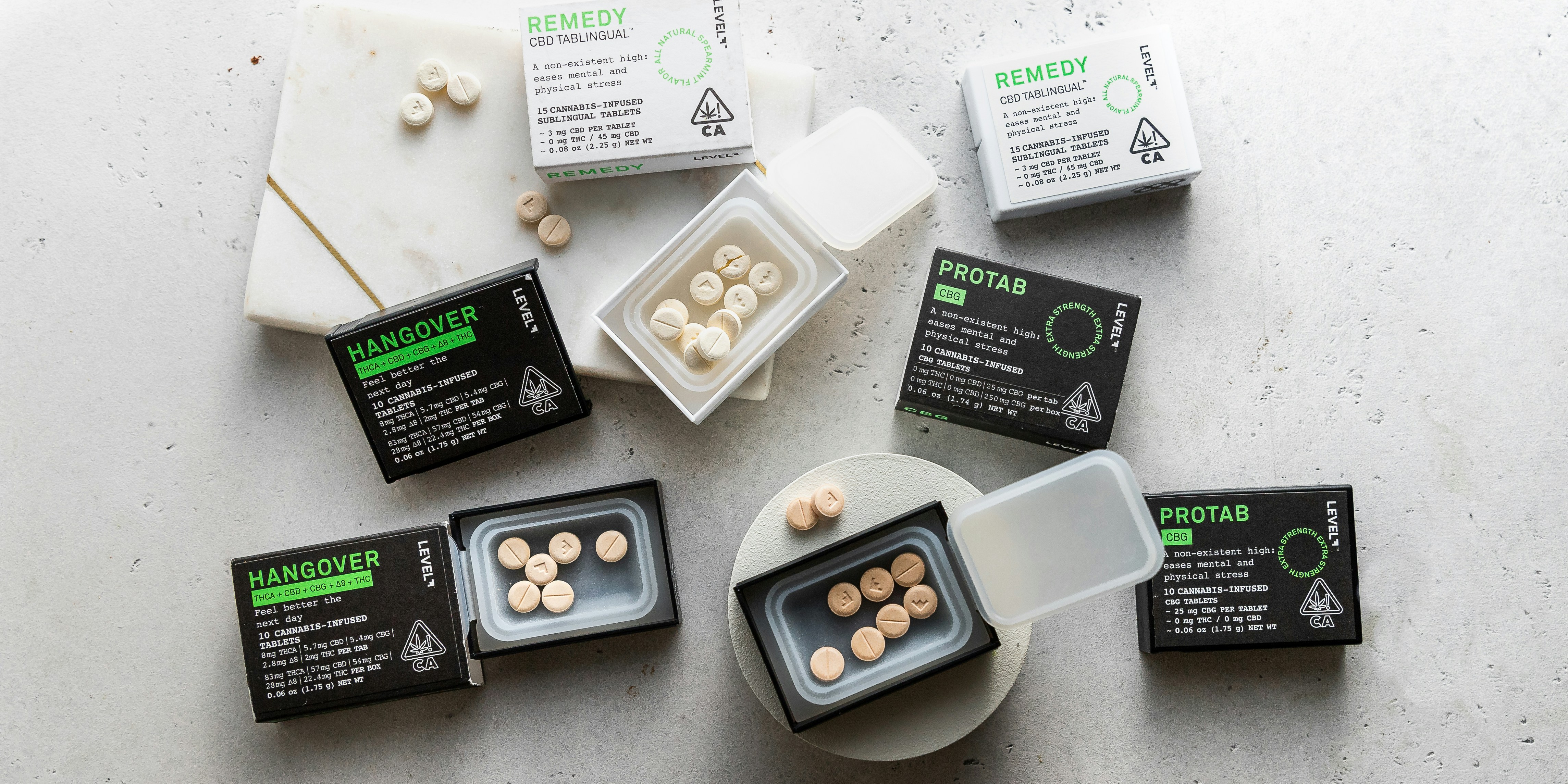
Interpreting the 2018 Farm Bill for THCA: Distinguishing Hemp Derived Cannabinoids from Prohibited THC Concentrations
Under the 2018 Farm Bill the federal benchline is the concentration of delta‑9 THC on a dry weight basis – commonly cited as the familiar 0.3% threshold. That simple metric becomes complex when you introduce THCA, the acidic precursor that doesn’t produce a high until it’s decarboxylated into delta‑9 through heat or aging. As THCA has a diffrent molecular weight, analysts and regulators frequently enough use a conversion factor (commonly 0.877) to express THCA as an equivalent delta‑9 THC amount. The practical result: many compliance programs compute “total THC” as delta‑9 THC + (0.877 × THCA), and use that total to judge whether a sample remains within the 0.3% federal limit.
For online sellers – especially in California’s nuanced regulatory landscape – the big takeaway is that appearance and chemistry can diverge. A product that tests below 0.3% delta‑9 but contains high THCA may still be treated as non‑compliant once converted to a “total THC” basis. To stay on solid ground, prioritize transparency and traceable documentation:
- Ask labs for separate values (delta‑9 THC and THCA) and a computed total‑THC result.
- Keep COAs with timestamps and batch numbers easily accessible for e‑commerce listings.
- Factor in stability testing to predict post‑shipping conversion from THCA to delta‑9 under heat or prolonged storage.
- Label conservatively – avoid facilitating consumer decarboxylation instructions or intoxication claims.
| Lab Result | Delta‑9 THC (%) | THCA (%) | Total THC (calc) | Compliance |
|---|---|---|---|---|
| Sample A | 0.10 | 0.25 | 0.10 + (0.877×0.25) = 0.32 | Exceeds 0.3% |
| Sample B | 0.05 | 0.22 | 0.05 + (0.877×0.22) = 0.24 | Within limit |
Regulatory interpretations can shift and states – notably California – layer their own rules on top of federal language. Treat the conversion calculation as a working standard for risk management: use conservative product formulation, retain clear COAs on e‑commerce pages, and design fulfillment practices to minimize heat exposure during shipping. That pragmatic blend of chemistry and documentation is the clearest path through the gray area where hemp science meets marketplace reality.
In Conclusion
Like any journey through shifting terrain, navigating THCA, California e‑commerce, and the 2018 Farm Bill asks for a steady hand, a good map, and an eye on the weather. The federal framework set by the Farm Bill created new possibilities for hemp-derived products, but THCA’s chemical quirks, California’s patchwork of state and local rules, and evolving enforcement priorities mean the route isn’t straight-it’s a coastline of quirks, coves and occasional regulatory fog.
practically, that means vigilance: clear product testing and labeling, rigorous age‑verification and platform compliance for online sales, and attention to how state regulators and courts interpret hemp’s boundaries. It also means being nimble-businesses and consumers alike should expect guidance to change as agencies clarify standards, legislatures revise laws, and the courts weigh in.
If there’s a single takeaway, it’s this: treat the present landscape as manageable but mutable. build compliance into every stage of your operation, lean on qualified counsel when questions cross legal lines, and prioritize transparent dialog with customers and partners. Those habits mitigate risk today and make it easier to adapt tommorow.
The map will keep changing. For those willing to read it carefully and update their bearings, possibility remains-tempered by prudence and shaped by the next round of rules. Stay informed, stay compliant, and keep steering with both curiosity and care.