


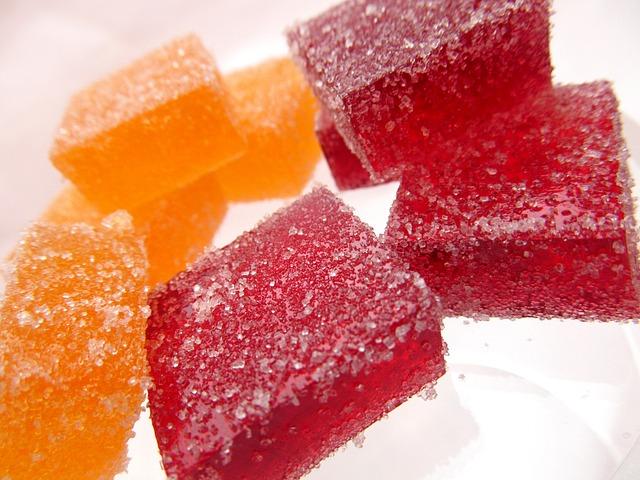
Imagine a jar on teh countertop labeled like a treasure chest: dense, colorful, and promising a potent little bite. in recent months, that jar has increasingly been filled not with candy, but with the newest entrants to the hemp market – bulk, high-potency THCA gummies that flirt with the edges of Delta-9 legality. For consumers and retailers alike, the appeal is simple: concentrated effects, convenience, and the cost savings of buying in larger quantities. But beneath the glossy exterior lies a thicket of chemistry and law that deserves a clear-headed look.This article untangles that territory. We’ll explore what “strongest THCA” really means,how THCA relates to Delta-9 THC,and why the legal status of Delta-9 in your state changes everything from labeling to how products are formulated and sold.Rather than cheerleading or condemning, the aim here is pragmatic: to equip you with the facts you need to assess potency claims, understand the implications of bulk purchasing, and navigate the legal safeguards that vary by jurisdiction.
Whether you’re a curious consumer, a shop owner weighing inventory, or simply trying to make sense of the latest hemp offerings, read on for a measured guide through potency, policy, and practical considerations – because when something is sold by the pound, it pays to know what’s inside.
State Law Checklist for Buying High Potency THCA Gummies Safely and Legally
Before you add a bulk pack of potent THCA gummies to the cart, confirm the local rules. Laws vary wildly: some states treat THCA as a hemp derivative, others classify it like THC. Verify whether your jurisdiction measures legality by Delta‑9 concentration, total cannabinoid weight, or the molecule’s origin – and keep one clear copy of the product’s Certificate of Analysis (COA) with every purchase.
Essentials to check right now:
- Legal status: hemp vs. cannabis designation in your state
- Delta‑9 limits: confirm the legal percentage threshold
- COA availability: batch-specific lab reports showing potency and contaminants
- Age and purchase limits: minimum purchaser age and per-transaction caps
- Interstate transport rules: shipping through or into other states can be illegal
| Check | fast rule of thumb | Action |
|---|---|---|
| Delta‑9 threshold | Often ≤ 0.3% | Verify COA per batch |
| Labeling & packaging | Must list mg per piece | Confirm serving-size potency |
| Transportation | State-to-state varies | Avoid crossing borders without legal review |
Practical tips for staying legal and safe: buy only from licensed vendors, keep digital and printed COAs for every bulk lot, and record the batch number and date of purchase. If you plan to consume, note potency per gummy and start with a small dose. simple habits – retain receipts, verify labeling, and avoid transporting products where rules are unclear – protect you better than optimism alone.

Reading Lab Reports and Certificates of Analysis to Verify Potency Purity and Delta 9 Content
Treat a COA like a map: it tells you where the cannabinoids live, how clean the product is, and whether the numbers on the gummy jar are honest. Start by confirming the batch number, the testing date and the lab’s accreditation (look for ISO/IEC 17025 or a clearly named third‑party lab). A reputable report will name the test method (usually HPLC for cannabinoids), list limits of quantitation (LOQ), and attach signatures or a QR code linking back to the source.If any of those are missing, consider it a yellow flag.
Potency can be written in percent,mg/g,or mg per serving – learn to convert so you’re comparing apples to apples. delta‑9 THC appears as its own line; THCA is listed separately and can inflate apparent potency because THCA converts to delta‑9 when heated. Many labs show a “total THC” figure using the conversion factor 0.877 × THCA + Δ9 THC. Focus on the mg per serving for gummies, and double‑check the math between the label and the COA.
Purity panels are just as important as potency. Look for passing results in pesticides, heavy metals, residual solvents, and microbial screens. Common good signs are results reported as “ND” (not detected) or values below regulatory action limits, shown with units like ppm or ppb.Below is a quick reference to help decode common entries on a résumé-style COA:
- ND = Not Detected (below LOQ)
- LOQ = Limit of Quantitation (the smallest reliably measured amount)
- Method = How they tested (HPLC, GC, ICP‑MS, etc.)
- Accreditation = Confidence in lab competence
| Analyte | Example Result | Unit |
|---|---|---|
| Δ9 THC | 0.18 | % w/w |
| Total THC | 0.45 | % w/w |
| Pesticides | ND | ppb |
watch for red flags: COAs that don’t match the product’s batch number, suspiciously high potency with no supporting chromatogram, or a lack of testing for key contaminants. When the math adds up and the lab identity checks out, you can be more confident that those bulk THCA gummies contain the potency and purity the label promises – and that any delta‑9 content has been properly reported.
Key Takeaways
Whether you’re buying in bulk for convenience, value, or curiosity, the landscape around the strongest THCA gummies – and Delta‑9’s legality where you live – can change like whether on a long road trip. Take the facts covered here as your map: confirm local laws, prioritize third‑party lab testing and clear labeling, source from reputable sellers, and treat potency with respect.
Practical caution beats impulse: store products safely, keep them away from children and pets, be mindful of workplace and driving rules, and “start low, go slow” if you’re trying a new product. If you’re unsure about legal or health implications, consult a qualified professional.
informed choices turn novelty into control. With a little homework and cautious curiosity, you can navigate the THCA market responsibly – and arrive at a decision that fits your state’s rules and your personal priorities.

