



At the intersection of chemistry and statute lies a deceptively small but consequential question: how much THC does a product truly contain? For regulators, producers, retailers and consumers alike, the answer can determine whether a flower is labeled as hemp or marijuana, whether a product clears a compliance test, or whether a business can legally enter a marketplace. “Decoding Total THC Rule & THCA: A Neutral Legal Guide” sets out to translate that technical language into clear terms-without taking sides.This introduction will briefly orient readers to the two main actors in the story. THCA is the acidic, non-intoxicating form produced in the living plant; THC (chiefly delta‑9 THC) is the compound associated with psychoactive effects and legal thresholds. Many regulatory frameworks assess “total THC” by converting THCA into its potential THC equivalent (using a chemical conversion factor) and adding that to measured delta‑9 THC. The result: a single number with outsized legal and commercial impact.
The landscape is layered and variable. Thresholds, testing methods, and reporting rules differ across jurisdictions and change over time, so a product that complies in one place may not in another. This guide aims to explain the science behind THCA and total THC, outline how regulators commonly approach calculation and testing, and explore practical implications for compliance and consumer clarity-while remaining strictly informational, not legal advice.
Read on to equip yourself with a neutral, accessible framework for understanding total THC rules: what they mean, how they’re derived, and why they matter to anyone navigating today’s hemp and cannabis markets.
Understanding the Total THC Rule: Legal Definitions, Testing Methods, and Threshold Calculations
Legal definitions matter as chemistry and law speak different dialects. In lab reports you’ll often see two distinct entries: Δ9‑THC (the psychoactive form) and THCA (the non‑intoxicating acid form produced in the living plant). Many statutes,though,regulate a single metric – commonly called “total” THC – that aggregates both molecules in a way that approximates potential psychoactivity after decarboxylation. Jurisdictions vary in wording and thresholds, so the same sample can be compliant in one place and not in another even though the chemistry hasn’t changed.
Testing methodology directly shapes the numbers on a certificate of analysis. modern labs typically use HPLC because it measures acidic and neutral cannabinoids without heating the sample; GC can convert THCA to Δ9‑THC in the injector and thus inflate apparent THC. Reports usually show values on a dry weight basis, meaning moisture content is removed from the calculation. For legal certainty,choose an accredited lab that documents limits of quantitation,sample readiness,and instrument calibration.
Threshold calculations rely on a simple molecular correction: when THCA loses CO2 during decarboxylation it becomes Δ9‑THC, but some mass is lost. The industry standard conversion uses the factor 0.877. In practice the formula is written as: Total THC = Δ9‑THC + (0.877 × THCA). Laboratories typically report totals rounded according to local rules; some regulators require rounding to three decimal places, others to two.Below is a small examples table to make the arithmetic tangible.
| Sample | THCA (% w/w) | Δ9‑THC (% w/w) | Calculation | Total THC (% w/w) |
|---|---|---|---|---|
| Example A (compliant) | 0.300 | 0.020 | 0.020 + (0.300 × 0.877) = 0.283 | 0.283 |
| Example B (non‑compliant) | 0.400 | 0.050 | 0.050 + (0.400 × 0.877) = 0.401 | 0.401 |
Practical takeaway: treat testing strategy and documentation as part of compliance. Producers and regulators should adopt clear sampling protocols, confirm whether totals are reported on a dry weight basis, and agree on rounding rules. Keep in mind that storage, heat, and processing can shift THCA/Δ9‑THC balance, so frequent testing and chain‑of‑custody records are prudent. useful routines include:
- Test early and often: monitor flower at harvest and after drying.
- Use accredited labs: prefer HPLC reports that show both THCA and Δ9‑THC.
- Document conversions: display the 0.877 factor and rounding method on coas.
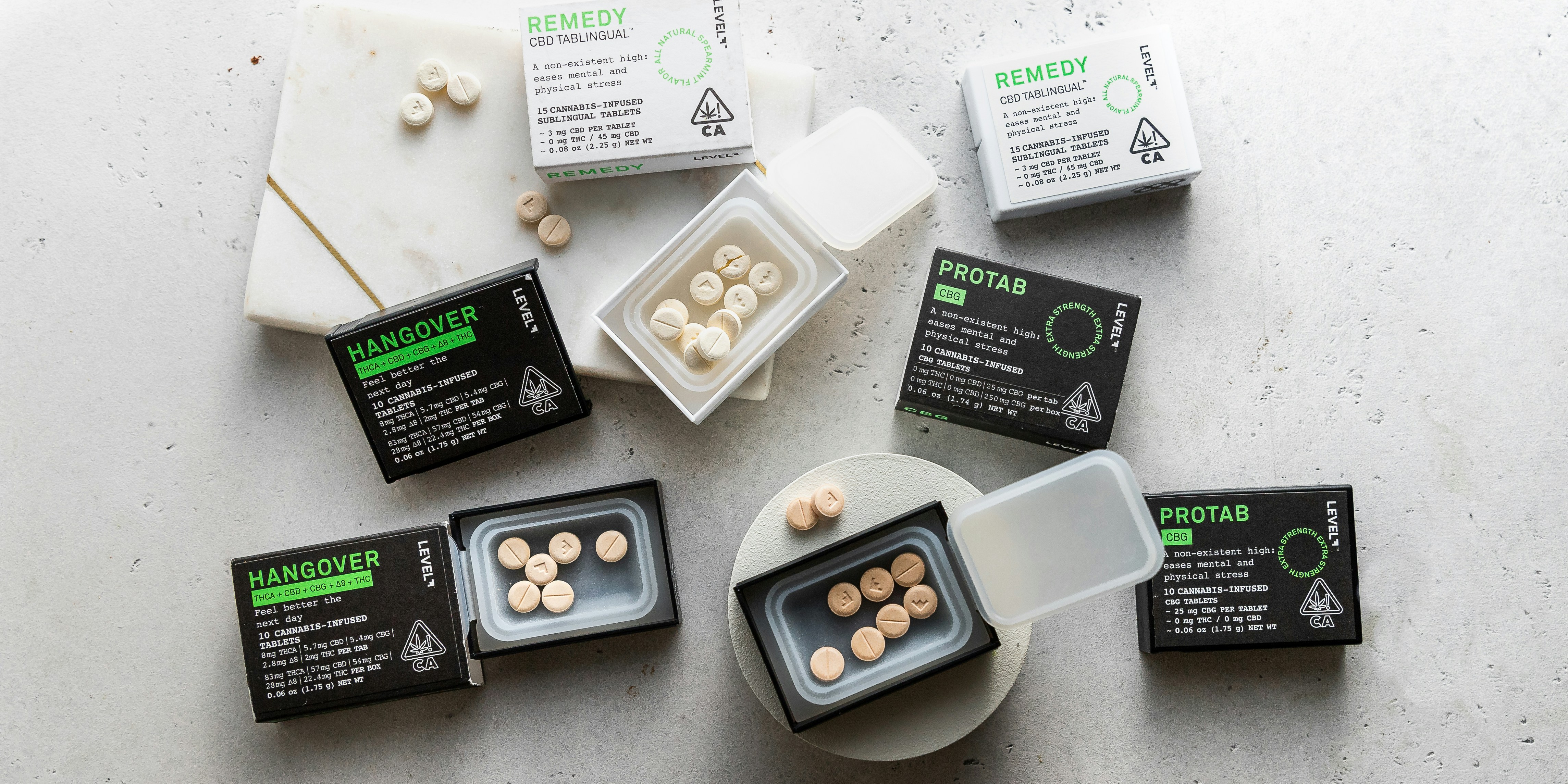
Interpreting THCA in Law and Lab: Decarboxylation Dynamics and Compliance Implications
Think of THCA as the dormant spark in the plant-chemically distinct, non-intoxicating, but primed to become delta‑9 THC when it loses CO2. Laboratories and regulators rarely treat THCA as invisible; instead they convert a portion of it into an equivalent THC mass to assess legal potency. Most compliance frameworks use a conversion multiplier (commonly 0.877) to calculate “total THC” = measured Δ9‑THC + (THCA × 0.877), reflecting the molecular weight change during decarboxylation.
Analytical technique and sample handling shape the story a lot more than people expect. HPLC preserves the cannabinoid acids and reports THCA and Δ9‑THC separately, while GC (with a hot injector) can thermally decarboxylate THCA and overestimate native THC. Minor variations-oven drying, storage temperature, or even a few minutes of heat during processing-can shift results enough to alter a product’s legal status. To reduce surprises, labs should validate methods that match how the product is intended to be used and document decarb potential.
For producers and retailers the consequences are practical and immediate: exceeding a statutory THC threshold (for example,the familiar 0.3% cap in many hemp markets) often hinges on the total‑THC calculation rather than raw THCA alone. Practical controls include cold chain handling, pre‑test stabilization, batch-level testing, and conservative labeling that accounts for conversion variability. Keep in mind that post-test processing (baking, vaping, or aging) can raise active THC even if initial tests were within limits.
Below is a simple illustrative conversion that compliance teams use when evaluating results:
| Measured THCA | Measured Δ9‑THC | Conversion (×0.877) | Total THC |
|---|---|---|---|
| 2.00% | 0.05% | 1.754% | 1.804% |
| 0.34% | 0.01% | 0.298% | 0.308% |
- Key practice: always report both THCA and Δ9‑THC and show the conversion math.
- Audit tip: retain chain‑of‑custody and method validation records to defend test outcomes.

Navigating Jurisdictional Differences: Reconciling State Rules with Federal Guidance and Cross Border Sales
Across the patchwork of American cannabis regulation, a single product can be legal in one jurisdiction and noncompliant in the next. The federal baseline-hemp defined by the 2018 Farm Bill as containing less than 0.3% delta‑9 THC on a dry weight basis-creates a floor, not a ceiling. States frequently layer their own tests, thresholds, and counting conventions on top of that baseline, which means companies selling across borders must think in terms of multiple simultaneous standards rather than a single “legal” number.
Laboratories and regulators often reconcile THCA (the acidic precursor) with delta‑9 THC using a conversion factor-most commonly around 0.877-to calculate “total THC.” But that convention is neither universal nor static: some states count THCA fully, others ignore it, and a few apply different conversion formulas or measurement units. The practical result is a divergence between what a lab report says and how a particular jurisdiction interprets that report for enforcement or labeling purposes.
- Standardize testing protocols – choose accredited labs and consistent sampling methods.
- Label with multiple metrics – show delta‑9, THCA, and total THC calculations to accommodate different readers and regulators.
- Document chain of custody – maintain records that trace raw material origin, test dates, and storage conditions.
- Plan routes and contracts – align transportation documents and purchase agreements with the strictest applicable rules.
The table below sketches typical state approaches to highlight operational friction points.
| Jurisdiction Type | How THC Is Counted | Cross‑Border Concern |
|---|---|---|
| Conversion‑based (e.g.,alpha) | Delta‑9 + (0.877 × THCA) | Lab variability can flip compliance status |
| Delta‑9 only (e.g., Beta) | Measures only active delta‑9 THC | Products high in THCA may be permitted |
| Strict transport (e.g., Gamma) | May require permits, manifests | Transit rules can block interstate sales |
Navigating these differences is an exercise in risk management: harmonize testing, prepare multi‑metric labels, and maintain robust documentation so a single product can be defended under competing rules. While federal guidance sets the starting point, operational compliance depends on anticipating local interpretations and building adaptability into production, testing, and distribution practices.
Managing Risk and Enforcement Exposure: Inspection Readiness, Documentation, and Dispute Resolution Strategies
Preparing for an inspection is less about panic and more about choreography. A well-drilled file system and a familiar staff make regulators’ visits routine instead of disruptive. Keep a visible,up-to-date set of Standard Operating Procedures and sampling plans,and train at least two people on the inspection checklist. During an inspection, emphasize transparency: present documents in logical bundles, flag recent changes, and be ready to explain your THC/THCA calculation methods in plain language. Small gestures-clear labeling, a concise folder for the current lot, and access to digital COAs-go a long way toward reducing perceived enforcement risk.
- SOPs & Training: current, signed, and version-controlled
- Sampling & Chain-of-Custody: Traceable logs and retention dates
- COAs & Laboratory Communications: Original reports and lab correspondence
- Corrective Action Records: Evidence of fixes and follow-up
documentation is your legal memory. Maintain clear records that link batches, tests, and decision points-especially when converting THCA to Total THC. Electronic systems (LIMS, METRC, or compliant ERP modules) reduce human error but ensure backups and exportable reports for inspectors. A compact table of critical documents and suggested retention periods can streamline audits and legal reviews, helping you justify practices if calculations or analytics are challenged.
| Document | Purpose | Suggested Retention |
|---|---|---|
| Certificate of Analysis (COA) | Potency & contaminants verification | 2 years |
| Chain-of-custody | Sample traceability | 3 years |
| SOPs & Training Logs | Operational consistency | 5 years |
When disputes arise, move from defensiveness to strategy. Preserve original samples and all raw lab data immediately, notify the testing lab and regulator in writing, and consider an independent third-party retest. use tiered resolution: administrative appeal, mediation, then-if necesary-formal adjudication. Throughout, document every contact and decision. A clear timeline and a neutral, evidence-focused narrative often defuse enforcement intensity and shorten resolution time.
- Immediate steps: Preserve samples, compile raw data, inform stakeholders
- Mediation options: Independent retests, expert consultations
- Long-term risk reduction: Regular internal audits, cross-functional compliance reviews
To Wrap It Up
as the smoke clears from a thicket of technical definitions and regulatory nuance, the Total THC rule and the chemistry of THCA begin to look less like an arcane maze and more like a map – one that changes depending on the jurisdiction you’re traveling through. Understanding how THCA converts to delta-9 THC, and how regulators account for that conversion, is not an academic exercise only; it shapes cultivation choices, testing protocols, labeling, and what products can lawfully move through the market.
This guide aimed to translate jargon into practical concepts: how total THC is calculated, why conversion factors matter, and were legal lines are drawn and redrawn. Yet laws, testing standards, and enforcement priorities evolve, and the details that determine compliance can be narrow and highly context-dependent. Treat this piece as a compass rather than a final verdict: it points you in the right direction but doesn’t replace local rules, laboratory verification, or professional counsel.
Keep watching the regulatory horizon, document your testing and sourcing practices, and verify rules that apply to your specific operations or products. With the right mix of scientific awareness and legal attention, businesses and consumers alike can navigate the shifting landscape with clearer expectations and fewer surprises.

