


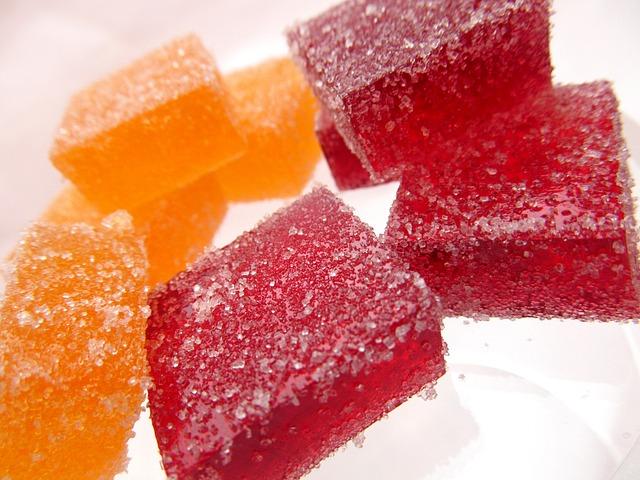
Picture a small, colorful gummy sitting on your palm like a promising miniature map: radiant, approachable, and pointing toward a curious terrain of cannabinoids. In recent years,THCA gummies-especially those manufactured in the United States-have emerged as a popular way for people to explore cannabis compounds with clearer labeling,domestic quality controls,and a wider array of formulation choices. But behind the friendly shapes and glossy jars lies a web of potency, legal nuance, and individual variability that makes dosage and product selection anything but automatic.
this article serves as a practical compass. We’ll unpack what THCA is and how it differs from Delta-9 THC, explain why “Made-in-USA” can matter for testing and consistency, and walk through the factors that influence dosing-product strength, tolerance, body chemistry, and intended experience.You’ll also find a straightforward look at delta-9 options for readers who want or need that pathway, plus legal and safety checkpoints to consider before you buy or consume.Whether you’re a cautious newcomer or someone refining your preferences, the goal here is clarity: clear definitions, clear steps for approaching dosage, and clear considerations for choosing a reputable, domestically produced gummy. No hype, no absolutes-just the data you need to make an informed choice.
Made in USA THCA Gummies Explained: What THCA Is,How It Works,and Why Domestic sourcing Matters
THCA is the raw,acidic form of the cannabinoid most people know as THC. In its natural state inside the plant it’s largely non-intoxicating, but it becomes psychoactive onyl after decarboxylation (heat or chemical change) converts it into delta-9 THC.Scientific understanding is still evolving-current studies suggest THCA interacts differently with the body than delta-9, perhaps offering therapeutic signals without the immediate “high.” Because gummies preserve a specific chemical profile, manufacturers can craft products that emphasize THCA’s unique properties while minimizing unwanted conversions.
When you chew a gummy, chemistry and biology meet: edible THCA has a diffrent onset and metabolic path than inhaled cannabinoids. Oral consumption typically produces a slower rise and a longer tail of effects, and whether some THCA converts to delta-9 in the digestive tract depends on formulation and manufacturing. Practical points to remember:
- Onset: 30-120 minutes is typical for edibles.
- Duration: Effects can last 6-12 hours depending on dose and metabolism.
- Dosing: Start low (e.g., 2.5-5 mg) and wait several hours before re-dosing.
- Testing: Choose products that are third-party tested for cannabinoid profile and contaminants.
Domestic sourcing matters because it tightens the chain from seed to shelf. U.S.-based growers and manufacturers ofen adhere to federally influenced standards, use certified labs for potency and purity, and provide clear lot traceability-crucial when a product’s subtle chemistry can change with processing.The table below highlights practical differences that affect safety, transparency, and consistency.
| Attribute | Domestic | Imported |
|---|---|---|
| Quality control | On-site audits, state labs | Variable standards |
| Testing transparency | Accessible COAs, easy verification | Harder to trace results |
| Supply traceability | Seed-to-sale tracking possible | Less chain-of-custody clarity |
| Regulatory compliance | aligned with state hemp rules | Inconsistent legal oversight |

formulation Factors That Affect Potency: Terpenes, Full Spectrum versus Isolate, and Carrier Ingredients
Think of a gummy as a tiny orchestra: the cannabinoids are the soloists, but the surrounding cast of molecules-especially terpenes-conduct the mood. Terpenes like myrcene, limonene and pinene subtly shift onset, perceived intensity and overall character. A higher myrcene profile can make sensations feel more sedating, while limonene often reads as brighter and more uplifting. These aromatic compounds don’t change the milligram content on the label, but they alter how a dose is experienced, so two gummies with the same THCA number can feel noticeably different.
The choice between full-spectrum formulations and isolates is more than a marketing line – it influences potency and predictability. Full-spectrum blends carry minor cannabinoids and terpenes that may produce the so-called “entourage effect,” where synergy can make a dose feel stronger or more nuanced. Isolates deliver pure THCA (or Delta-9), which gives consistent, predictable dosing and fewer variables for users concerned about interactions or testing. Neither is inherently better; it comes down to whether you want nuanced complexity or dose precision.
Carrier ingredients are the unsung delivery system that affect absorption, shelf life and mouthfeel. Oils such as MCT improve lipid solubility and can speed absorption, whereas glycerin- or sugar-based matrices slow onset but extend stability and provide a familiar gummy texture.Vegetarian carriers like pectin behave differently from gelatin, influencing how cannabinoids are released in the digestive tract. Consider these common choices:
- MCT oil – faster absorption, smoother bioavailability.
- Glycerin/sugar syrup – stable, longer onset, sweet mouthfeel.
- Pectin/gelatin – texture and release profile vary; pectin for vegan options.
- Encapsulation – nanoemulsions or liposomal tech for higher apparent potency.
| Factor | Typical Impact | Practical tip |
|---|---|---|
| Terpenes | Modulate experience, onset and character | Check terpene profiles to match desired effects |
| Full-Spectrum vs Isolate | Synergy vs precision | Choose full-spectrum for complexity, isolate for consistent dosing |
| Carrier Ingredients | Affect bioavailability and texture | Look for MCT or encapsulation for faster absorption |

Storage,Lab Testing and Reading Certificates of Analysis: How to Verify Purity,Potency,and Regulatory Compliance
Gummies keep best when treated like delicate confections: store them in a cool,dry place away from direct sunlight and humidity. Ambient temperatures between 60-70°F (15-21°C) are ideal; if you live somewhere hot, refrigeration extends shelf life, but avoid freezing which can change texture. Always keep products in their original, sealed packaging and note the batch number and expiration date – those details link the jar on your shelf to the lab report for that production run.
Third‑party lab reports are the single most reliable proof of what’s actually inside a gummy. Trust only ISO‑accredited or state‑recognized labs that test for cannabinoid potency and for contaminants like heavy metals, residual solvents, pesticides, and microbial impurities. Watch for these red flags in labeling and reports:
- No COA or lab name listed
- Test date older than 12 months
- Total THC inconsistent with the product’s claim
- Any presence of banned pesticides, heavy metals, or solvents above limits
Reading a COA is easier with a checklist: find the batch number to confirm the sample, check the cannabinoid panel for THCA and Δ9‑THC (note whether values are expressed as mg/g or mg per piece), and scan the contaminants section for any flagged results or detections above limits of quantitation. Labs will often report limits of detection (LOD) and limits of quantitation (LOQ); a “non‑detect” means the compound was below the LOD, not necessarily absolutely absent.The short table below shows what to look for at a glance.
| Item | What to look for | Example |
|---|---|---|
| Batch ID | Matches product label | GUM12345 |
| Cannabinoid Profile | THCA, Δ9‑THC, mg/g or mg per gummy | 10 mg THCA / piece |
| Contaminants | No detections above legal limits | Pesticides: ND |
| Lab Accreditation | ISO 17025 or state lab ID | ISO 17025 |
For regulatory peace of mind, keep a copy of the COA with the product and verify that the labeled THC level complies with your state’s limit (for hemp‑derived products that’s often 0.3% Δ9‑THC by dry weight unless otherwise legalized). If you’re evaluating a Delta‑9 option, ensure the COA clearly differentiates delta‑9 levels and includes warnings about psychoactive effects. When in doubt, contact the manufacturer for clarification or request a recent third‑party confirmation – and always favor products with obvious, up‑to‑date documentation. Clear records and a skeptical eye are your best consumer protection.
Key Takeaways
whether you’re curious about THCA’s unique chemistry, weighing a Delta-9 option, or just trying to find the right gummy for your evening routine, the important pieces stay the same: know what’s in the bottle, understand how dose and form affect experience, and choose products with transparent sourcing and lab testing. Made-in-USA labeling can be a helpful signal of regulatory compliance and quality control, but it doesn’t replace reading certificates of analysis or confirming third‑party testing.
Respect local laws, store gummies securely, start low and go slow, and talk with a healthcare professional if you’re taking medications or have health concerns. The nuances between THCA and Delta‑9 matter for effects and legality, so informed choices – not impulse – will get you the results you want.
Ultimately, an educated approach is your best dose of confidence: consider this guide a map, use labels and labs as your compass, and let careful research lead you to the gummy that fits your needs.

