


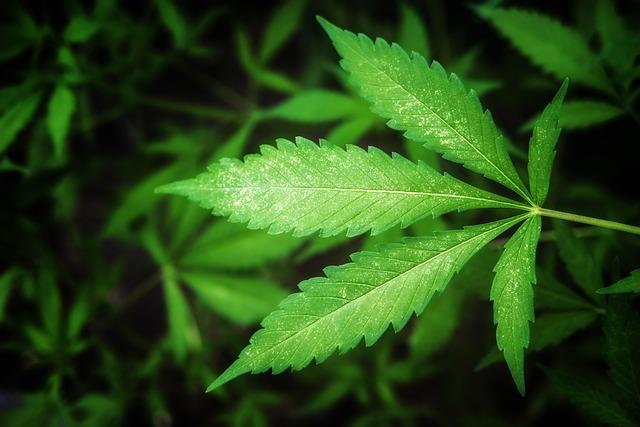
A single molecule can change the course of an industry. In the shifting landscape of cannabis and hemp regulation, that molecule is THCA – an acidic precursor that becomes the psychoactive THC when heated – and the rules that treat it as part of “Total THC.” As lawmakers,laboratories,growers and businesses dance to an evolving regulatory tune,understanding how regulators calculate and regulate Total THC has become essential for anyone with a stake in the market.
This article untangles the technical and legal threads behind the Total THC rule and the role of THCA in recent policy changes. We’ll outline how Total THC is defined and measured, why the inclusion or exclusion of THCA matters for product classification, and how recent legal updates are reshaping compliance, enforcement and commerce. Expect clear explanations of scientific concepts,the regulatory rationale,and the practical consequences for cultivators,manufacturers and consumers.
Neutral in tone but vivid in detail, this overview is designed to bring clarity to a complex topic: the intersection of chemistry, law and commerce where a tiny molecular shift can determine whether a plant is regulated as hemp or cannabis. Follow along for a concise, up-to-date guide to the rules that are redefining an industry.
Understanding the Total THC Rule and the Chemistry of THCA
THCA is the botanical precursor to the familiar psychoactive molecule, delta‑9‑THC.In living cannabis plants it exists primarily as an acid: a bulky carboxyl group keeps it from binding effectively to human cannabinoid receptors, so it is indeed essentially non‑intoxicating in its raw form. When exposed to heat,light,or time,that carboxyl group is lost through a chemical step called decarboxylation,producing delta‑9‑THC and a slight loss of molecular mass – the reason regulators apply a conversion factor when measuring compliance.
The so‑called total THC calculation compensates for that chemical change by converting measured THCA into an equivalent delta‑9‑THC amount before summing.Practically,labs multiply THCA by a factor (commonly 0.877) to reflect the mass lost during decarboxylation, then add any directly measured delta‑9‑THC to produce a regulatory “total.” Many jurisdictions then compare that total against a legal threshold (such as, the widely referenced 0.3% dry weight benchmark used in several hemp frameworks) to determine whether a product is compliant.
compliance hinges on chemistry and chain‑of‑custody: accurate testing, careful post‑harvest handling, and clear labeling. Small shifts in THCA content or moisture can tip a product over the legal line.Practical steps to reduce risk include:
- Harvest timing and drying protocols that stabilize cannabinoid profiles
- Using accredited labs that report both THCA and delta‑9‑THC along with calculation methods
- Maintaining sample records and re‑testing when processing involves heat
Below is a simple compliance snapshot showing how the conversion works in practice:
| Measured THCA | Measured Δ9‑THC | Converted THCA (×0.877) | Total THC | Compliant? |
|---|---|---|---|---|
| 0.20% | 0.05% | 0.175% | 0.225% | Yes |
| 0.40% | 0.01% | 0.351% | 0.361% | No |

How Laboratory Testing and Conversion Factors Determine Legal Potency
Laboratories are the arbiters of compliance when it comes to cannabis potency. Modern testing typically uses HPLC to quantify both THCA and Δ9-THC without inducing decarboxylation, as gas-chromatography methods can artificially inflate Δ9-THC by converting THCA during analysis. The commonly applied conversion factor (approximately 0.877) corrects for the molecular mass lost as CO2 during decarboxylation, so regulators require reporting of a single consolidated value – frequently enough called total THC – rather than raw individual cannabinoid concentrations.
The legal reporting formula most jurisdictions expect is simple on paper but nuanced in practice: Total THC = Δ9-THC + (0.877 × THCA). Labs must also account for moisture (reporting on a dry-weight basis vs. wet weight),method limits (LOD/LOQ),and measurement uncertainty when a result sits near a legal threshold. Below is a compact illustration of how the math shifts sample-by-sample:
| Sample | THCA (%) | Δ9-THC (%) | Calculated Total THC (%) |
|---|---|---|---|
| Flower A | 10.0 | 0.5 | 9.27 |
| Concentrate B | 0.5 | 0.8 | 1.24 |
| Edible C (wet) | 2.0 | 0.2 | 1.95 (dry-adjusted) |
Laboratory variability, sampling strategy, and storage or processing conditions can swing results enough to change legal status. Key operational factors include:
- Sampling representativeness – single-bud vs composite can differ widely.
- Storage and heat exposure – decarboxylation before testing raises Δ9-THC.
- Reporting conventions – rounding rules and dry-weight conversion affect final numbers.
- Analytical uncertainty – confidence intervals matter near statutory limits.
Because the science and legal thresholds intersect, producers and compliance officers should work closely with accredited labs, request method validation data, and plan for conservative labeling and post-harvest handling. When results hover around a regulatory cutoff,retesting or secondary confirmatory methods may be necessary – regulators commonly except documented uncertainty and validated procedures when adjudicating marginal cases.

Regulatory Variations and Court Decisions shaping Current Compliance
Regulators and judges are increasingly the twin sculptors of how Total THC is interpreted in practice, carving out rules that businesses must follow or challenge. Where some authorities treat THCA as a latent contributor to Total THC – applying a conversion factor (THCA → Δ9‑THC) before summation – others focus on the measured concentration of Δ9‑THC alone. That divergence has created a patchwork compliance landscape: what passes in one jurisdiction can trigger enforcement in another, and that variability is as influential as the statutes themselves.
Companies navigating this terrain are responding with practical, risk‑focused measures. Common steps include:
- Updating certificates of Analysis (coas) to reflect both raw THCA values and calculated Total THC.
- Adopting validated testing protocols that document decarboxylation handling and method limits.
- Reviewing labeling, transport routes, and retail channels to align with the strictest foreseeable interpretation.
- Maintaining robust chain of custody and legal counsel for jurisdictions with recent adverse rulings.
Recent court activity has emphasized that interpretations are ofen fact‑specific: the analytical method, timing of testing, and whether a product can reasonably convert THCA to Δ9‑THC under normal conditions can all sway a decision. That means compliance teams must treat legal developments as operational signals – shifting testing labs, reformulating products, or pursuing declaratory judgments when regulatory ambiguity threatens market access. In practice, documented lab processes and conservative product thresholds are a common bridge over legal uncertainty.
| Exmaple Forum | Typical Position | Operational Impact |
|---|---|---|
| Some state regulators | Include THCA in Total THC (with conversion) | Stricter limits; reformulation or relabeling |
| Other jurisdictions | Measure Δ9‑THC only | Broader market access; different test requirements |
| Court rulings | Mixed; fact-dependent | Heightened legal and compliance vigilance |
Operational Recommendations for Testing, Recordkeeping, and Supply Chain Controls
build your laboratory and quality programme around repeatable, defensible results. prioritize partnerships with accredited labs that can demonstrate validated methods for THCA and Δ9-THC quantitation,and require method sops and uncertainty statements with every Certificate of Analysis (COA). Keep a defined sampling plan (lot-based, statistically justified) and retain blind backup samples long enough to allow retesting when regulatory questions arise.Where conversion math is used to calculate total THC, insist on transparent documentation of the conversion factors and the lab’s approach to moisture and decarboxylation assumptions.
- Test early and often: entry testing on raw material, in-process checks, and final product verification.
- Require COAs: include full chromatograms, LOD/LOQ, and method references.
- Preserve samples: retain representative samples for a minimum period aligned with state rules and your risk profile.
Recordkeeping should be audit-ready, searchable, and immutable. move beyond spreadsheets to a centralized quality management or ERP system that timestamps chain-of-custody events, links COAs to batch records, and logs personnel actions. Keep a simple,consistent taxonomy for documents so auditors and investigators can quickly map a complaint,COA,and shipment back to a single lot. Below is a compact reference table you can adapt for company policy.
| document | Recommended Retention |
|---|---|
| COAs & chromatograms | 3-7 years |
| Chain of custody logs | 3 years |
| Supplier qualification files | 5 years |
| Sample retention labels | Until disposition |
lock your supply chain with practical controls: a formal vendor qualification program, lot-level traceability from seed/source to sale, and a quarantine process that prevents release until COAs and release criteria are verified. Train receiving teams to spot mismatches between product and paperwork and run periodic supplier audits focused on testing consistency and storage practices. Close the loop with a corrective-action plan that assigns owners, timelines, and verification steps-these operational threads reduce regulatory friction and protect margins when legal interpretations of THCA and total THC shift.
Anticipated Policy Shifts and Practical Steps for Staying Ahead
Regulators are likely to move from vague guidance to more granular rules around how THCA is counted toward total THC, and that shift will change the ground beneath many businesses overnight. Expect tighter definitions of “convertible THC,” standardized testing protocols,and clearer requirements for labeling and chain-of-custody documentation. states may harmonize some elements but also introduce carve-outs that favor local industries,so a one-size-fits-all compliance playbook will become obsolete.
Practical readiness is less about predicting every regulatory twist and more about building flexible systems. Begin with short, decisive actions and layer in longer-term controls:
- Audit and document: Map current products, tests and COAs; flag items close to regulatory thresholds.
- Upgrade testing: Work only with accredited labs that report THCA and delta-9 THC clearly and include conversion assumptions.
- Label and reformulate: Prepare label templates and ingredient plans so products can be tweaked quickly if limits change.
- Train the team: Educate sales, QC and legal on likely scenarios and decision triggers.
- Monitor & engage: Subscribe to regulatory trackers, join industry coalitions and consult counsel before policy windows close.
Use simple governance tools to translate uncertainty into manageable tasks. The table below provides a swift prioritization matrix you can adapt in a workstream or SOP document to keep compliance actions measurable and time-bound.
| Action | Why it matters | Priority |
|---|---|---|
| Update testing partners | Ensures consistent THCA/Δ9 reporting | High – 0-30 days |
| Revise label templates | Reduces risk of market removals | Medium – 30-90 days |
| Run scenario drills | Improves response speed under enforcement | Ongoing |
To Wrap It Up
As the legal landscape around cannabis continues to shift, the total THC rule and the role of THCA remain central pieces of the compliance puzzle. Whether regulators treat THCA as a separate compound or convert it into “total THC” for legal measurement affects testing protocols, product labeling, market access and, ultimately, who can lawfully buy, sell and possess cannabis-derived goods. Practitioners typically use a conversion factor (commonly around 0.877) to estimate how much Δ9‑THC could form from THCA when heated, but how and whether that conversion is applied depends on the jurisdiction and the evolving case law and guidance.
For producers, labs and retailers the takeaway is practical: keep testing methods documented, follow the latest agency guidance, and build compliance systems that can adapt quickly. For consumers and policymakers, the situation underscores the importance of clear definitions and consistent enforcement so that public safety, consumer expectation and market fairness align.
This update is a snapshot, not a destination. Expect further refinements, litigation and regulatory clarifications in the months ahead. Stay current with official guidance, consult qualified advisors for specific questions, and treat this area as an active frontier where science, law and policy continue to converge.

